
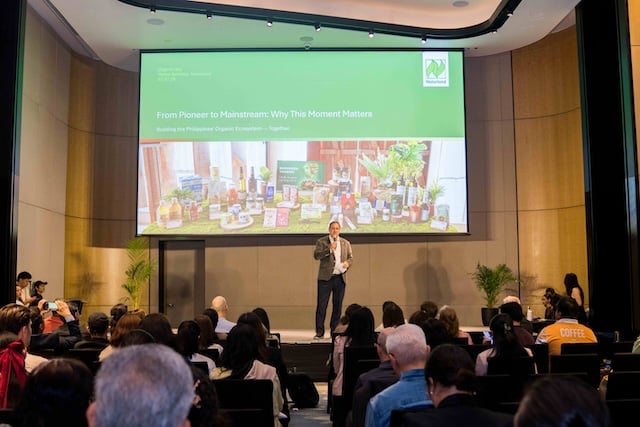
Through the European Union-supported “European Organic: Nurturing Every Juan” campaign, Naturland brought together more than 180 representatives from government, farmers’ organisations, civil society organisations, development partners, sustainability advocates, food chain actors and the media at Conrad Manila for European Organic Day Philippines 2026. Guided by the theme, “From Pioneer to Mainstream: Creating Organic Pathways and Partnerships for the Philippines,” the event explored how trusted certification, strategic partnerships, and greater consumer awareness can make certified organic products more accessible to Filipinos.
Marco Schlüter, Managing Director for International Affairs at Naturland e.V., emphasised that organic agriculture has evolved from a niche, values-driven movement into a mainstream response to global, social, and environmental challenges: “The world is going organic — and the Philippines is well placed to shape it. Organics reduce the dependence on costly imported pesticides and fertilisers while building long-term food security. It lets farming communities prosper and gives a growing middle class healthy and sustainable food choice. Europe has spent more than four decades building its organic ecosystem, including its standards and guarantee system. We want to share that experience and raise awareness of organic food and farming.”
Held in partnership with the Department of Agriculture’s National Organic Agriculture Program (NOAP) and with the support of the European Chamber of Commerce of the Philippines (ECCP) and Philippine social enterprise Mayani, the conference explored how knowledge exchange and cooperation can strengthen organic agriculture and local food systems in the Philippines.
Discussions highlighted the importance of aligning policy, responsible production, and community-led approaches to strengthen organic agriculture while empowering farmers and preserving agriculture biodiversity. They also underscored how consumer education and trusted certification can help build consumer confidence in certified organic products.
The event also showcased a range of EU organic and Naturland-certified products, including wine and chocolate from Germany, cheese from Austria, and pasta from Italy. The display highlighted the diversity of certified European organic products while reinforcing the role of trusted certification in helping consumers better understand how food is grown, produced, and sourced.
Naturland reaffirmed its long‑term commitment to strengthening the Philippines’ organic sector, underscoring the importance of collaboration between European and Filipino stakeholders to enhance food security, sustainability, and consumer trust in the country.
European Organic Day Philippines 2026 reflects the campaign’s broader goals to engage Filipino consumers and stakeholders, raise awareness of certified organic products, and strengthen partnerships across the food value chain.
As the Philippines continues to strengthen its organic agriculture sector, sustained collaboration across government, farmers’ organisations, development partners, sustainability advocates, and consumers is key to making certified organic a trusted, mainstream choice for Filipinos while expanding access to certified organic products and supporting a more sustainable food system.